
TPM — 3D Animation & Visualisation
TPM — 3D Animation & Visualisation
Two years rebuilding a patient-mobility product line in 3D — stills, mechanism animations, manual drawings and an AR model, all from one set of assets.
 Blender
 ZBrush
 Substance 3D Painter
 Marvelous Designer
 Adobe Photoshop
 Adobe Illustrator
 Adobe After Effects
 Adobe Premiere Pro
 DaVinci Resolve
 Unreal Engine
 PureRefBlenderZBrushSubstance 3D PainterMarvelous DesignerAdobe PhotoshopAdobe IllustratorAdobe After EffectsAdobe Premiere ProDaVinci ResolveUnreal EnginePureRef
[ Intro ]
A chair is easy to photograph. A mechanism is not.
TPM Research builds patient-mobility equipment sold to hospitals and care facilities — products whose value lives in how they move, not in how they look on a shelf. Over two years, as the 3D and visualisation lead on a team assembled by TargaPoint, the studio rebuilt the product line in 3D and turned it into stills, animations, manual drawings and an AR model, all from one set of assets.
The Concept
TPM Research sells patient-mobility equipment to hospitals and care facilities. The problem with that product is simple to state and hard to solve: its value is in the mechanism. A chair that lifts a patient’s legs, turns, and takes the strain off a nurse’s back looks, in a photograph, like a chair.
So the brief was never “make nice images”. It was: let a buyer understand in seconds what this equipment does, without standing next to it. That meant rebuilding the product in 3D and putting it in the rooms where it is actually used — a waiting room, a patient room, a hallway — rather than on a white background.
The Process
Each device was modelled from technical files, engineering references and photographs of the physical product, then checked back against the real thing for colour and material accuracy before anything was rendered. The moving parts got the attention, because those are the parts a purchasing decision turns on.
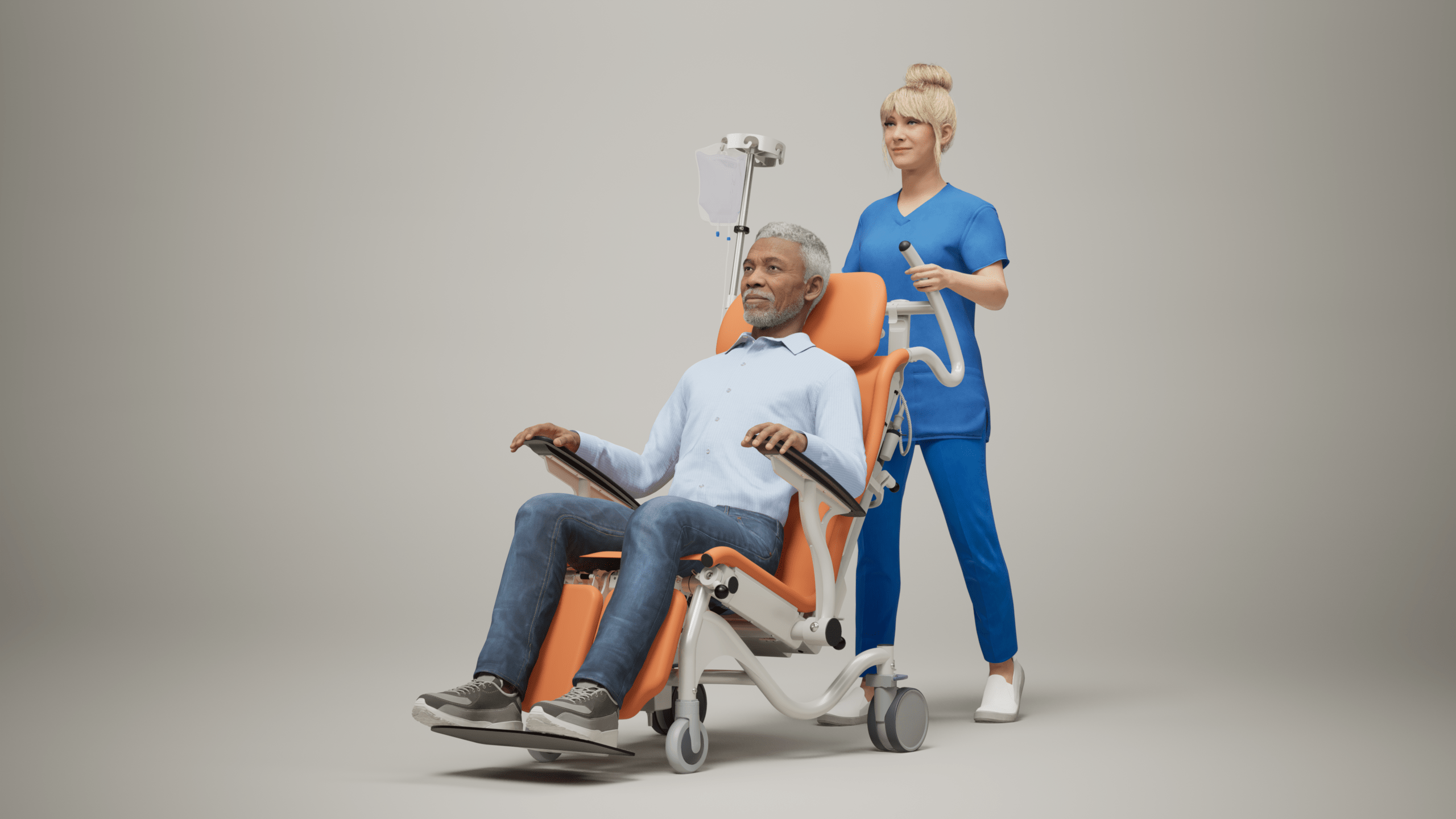
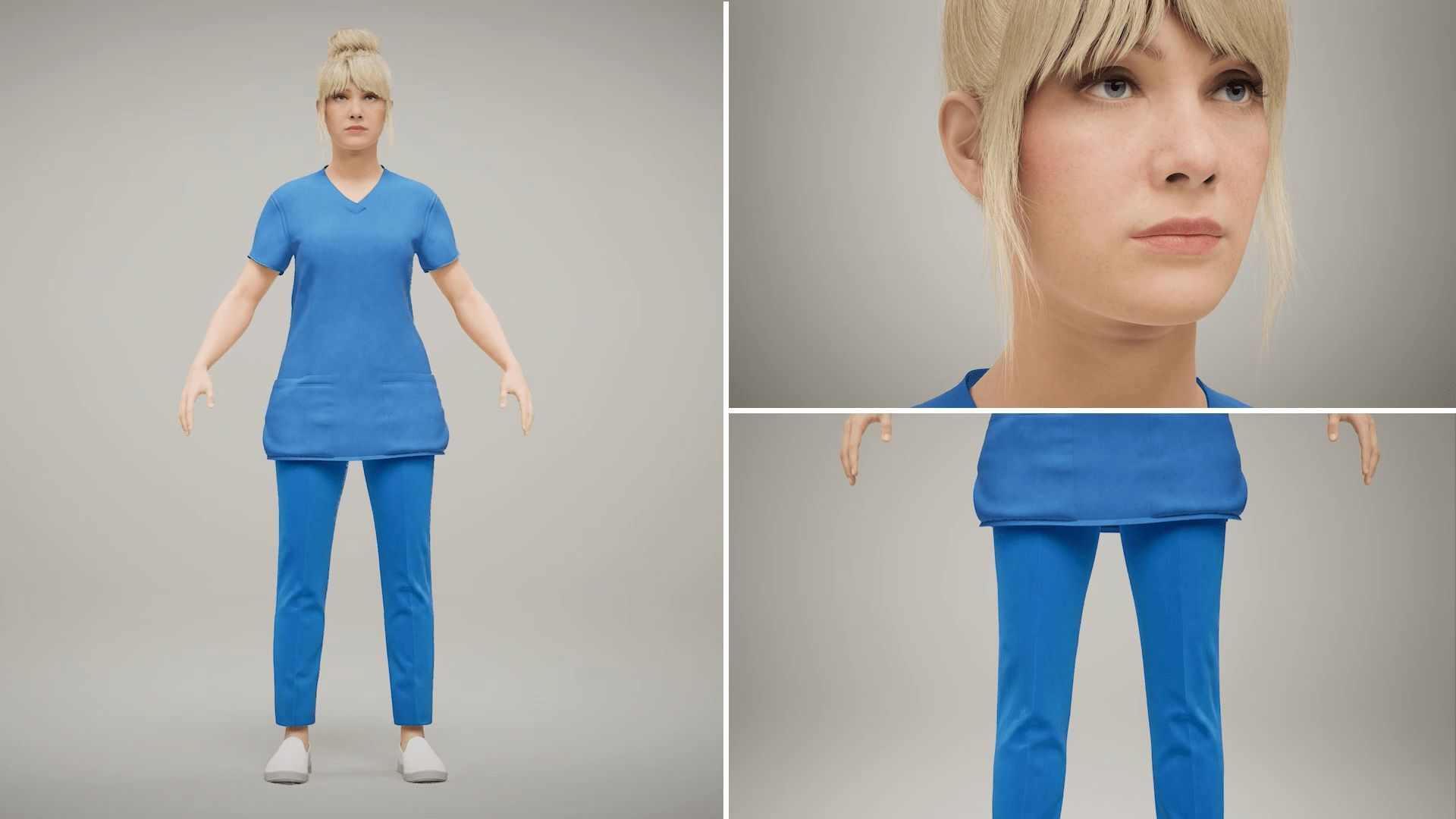
The environments were built and lit in Unreal Engine, which made it possible to place the same product in several rooms and re-shoot it from any angle without rebuilding a set. Digital humans — a patient and a nurse — were added to give the equipment scale and to show it in use rather than in isolation, down to designing the scrubs so the staff read as staff.
Everything ran in review cycles with the client team — stills first to agree the look, animation after. Nothing went to render until the room was right.
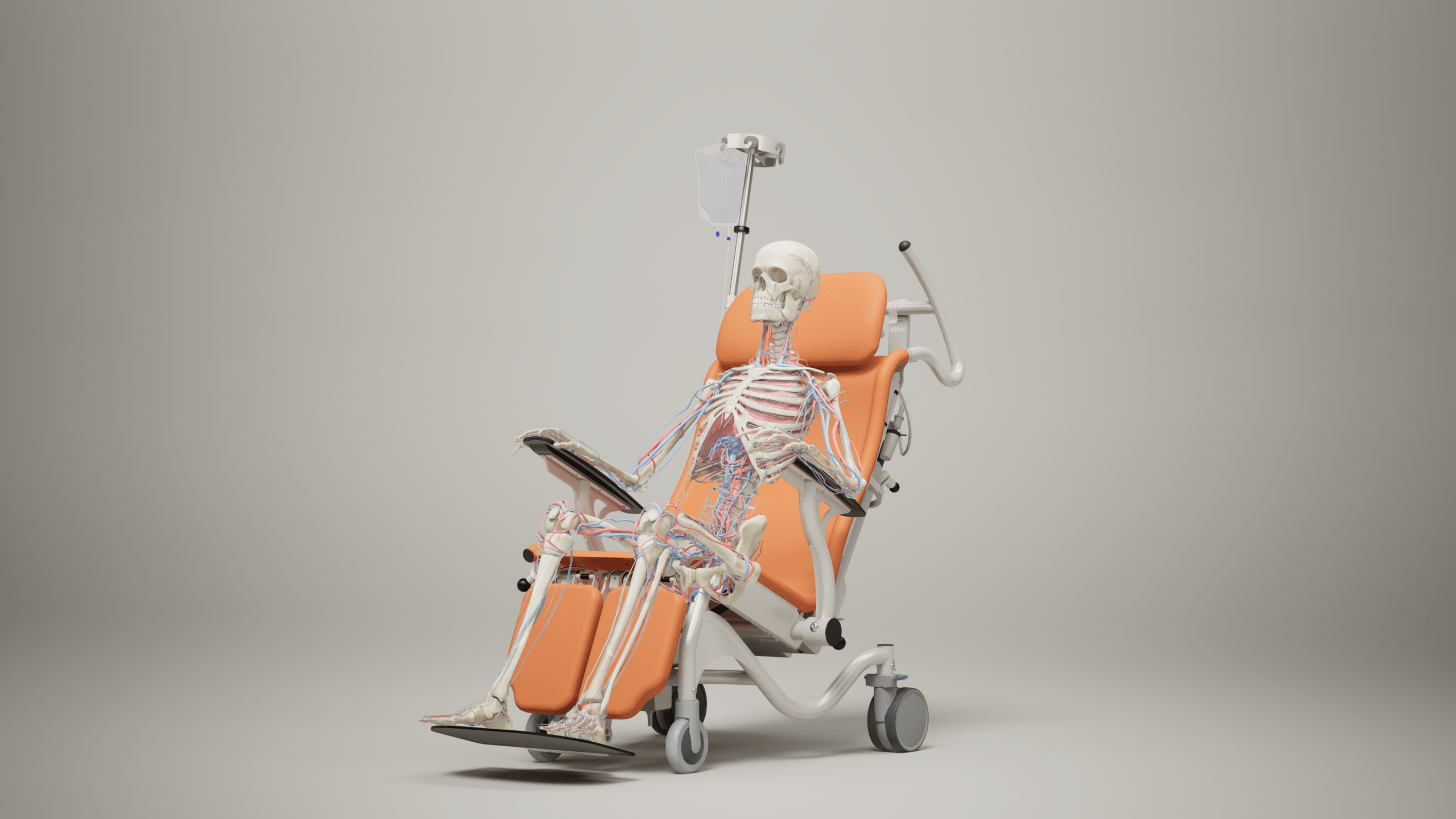
Drag the slider — same frame, skin off. Every pose is built on an anatomically correct skeleton, so joints bend where real joints bend and the equipment fits a real body.
The Assets
One 3D build, many outputs. This is where the work paid for itself.
4K stills. The product in context — by the bed, in the hallway, in the waiting room — used in presentations and sales material.
Mechanism animations. Short sequences showing the lift, the turn and the transfer, which explain the equipment faster than a page of text.
Line drawings. Clean black-and-white outlines generated from the same models for the instruction manual, including accessory variants.
Brochure and presentation imagery. The same assets re-framed for print and slides instead of re-shot.
An AR model. The product optimised down to a web-viewable file, so a prospect can place it in their own room from a phone.
The Result
A visual library that outlived the project. Marketing, sales, the manual and the AR viewer all draw on the same models, so a new accessory or a new colourway is a re-render rather than a new photoshoot — and every channel stays consistent with the others by default, not by effort.
That is the argument for building in 3D rather than shooting: the photoshoot ends when the photographer leaves. The model does not.
Why This Works for Technical Products
If your product has moving parts, options, or a size that people misjudge, photography is fighting you. A camera can only show the version that exists, in the room it is standing in, on the day it was booked. A 3D build shows every configuration, in any room, at any angle, forever.
The harder your product is to explain, the more this is worth.
Credits
Client · TPM Research
Engaged through · TargaPoint
3D, Animation & Visualisation · Studio Cauldron
Years · 2022–2024
Have a similar product?
Start a project